Freelance Income and Tax Management: A Practical Guide for Independent Contractors The first time I received a payment after leaving my corporate job three years ago, I felt a mix of pride and confusion. The contract stated 2,500,000 KRW, but only 2,417,500 KRW landed in my account. That missing 82,500 KRW was my first encounter with the 3.3% withholding tax. For any freelance professional or solopreneur, mastering the net income calculation is not just about math; it is about survival. Understanding how your gross pay translates to your actual wallet helps in managing irregular income and planning for the May annual filing. This guide breaks down the essential tax components every self-employed individual in Korea should know to stay financially healthy.
Navigating the 3.3% Withholding Tax System
Most freelancers in Korea operate as independent contractors subject to a 3.3% withholding tax. This amount is comprised of a 3% national income tax and a 0.3% local income tax, which the client or employer deducts before transferring your fee. Unlike regular employees who undergo a year-end settlement, freelancers must reconcile these prepayments during the Global Income Tax period in May.
Why the May Annual Filing Matters
The May annual filing is the definitive window to report your total earnings and claim deductible business expenses to lower your taxable income. By accurately reporting costs like remote work equipment or professional skill-building courses, you can often trigger a tax refund of the 3.3% previously withheld. Failing to file correctly can result in a penalty for non-payment or missed opportunities for income and tax deductions.
Expense Documentation: Beyond the Basics
Maintaining a clear paper trail of your spending is the only way to move from the simple expense rate to more beneficial categories. To maximize your deductions, you must collect expense documentation such as cash receipts and tax invoices for every business-related purchase. This habit is critical when you transition from a simple bookkeeping target to the double-entry bookkeeping obligation as your revenue grows.
| Tax Category | Standard Rate | Freelancer Context |
|---|---|---|
| Withholding Tax | 3.3% | Deducted at source for independent contractor fees. |
| Global Income Tax | 6% to 45% | Progressive tax brackets applied during the May filing. |
| Health Insurance | Variable | Calculated as a Health Insurance Local Subscriber based on income/assets. |
| National Pension | 9% of income | Monthly National Pension contribution based on reported earnings. |
| VAT Filing | 10% | Only applicable if you have formal business registration status. |
How to Use a Tax Calculator for Financial Stability
 A reliable tax calculator allows you to estimate your take-home pay by accounting for both taxes and social insurance premiums. By entering your gross project fee, you can see the impact of the 3.3% deduction and set aside funds for your future Health Insurance Local Subscriber premiums. This proactive approach prevents the "tax shock" that many new freelancers face when their insurance bills suddenly spike after their first profitable year.
- Automated Tax Confirmation: Quickly verify the exact amount your client should be withholding to ensure your freelance service contract is being honored.
- Net Income Optimization: Identify non-taxable items or deductible business expenses that can increase your actual take-home pay.
- Refund Planning: Estimate your potential refund during the May annual filing to better manage your cash flow during leaner months.
Protecting Your Future as a Solopreneur
 Beyond immediate taxes, long-term financial security requires utilizing specialized systems designed for the self-employed. Programs like the Yellow Umbrella Deduction provide a safety net while offering significant tax deductions that are not available to traditional employees. Additionally, as your income scales, you may need to decide between remaining an unregistered freelancer or obtaining business registration status to handle VAT filing and issue formal tax invoices to larger corporate clients.
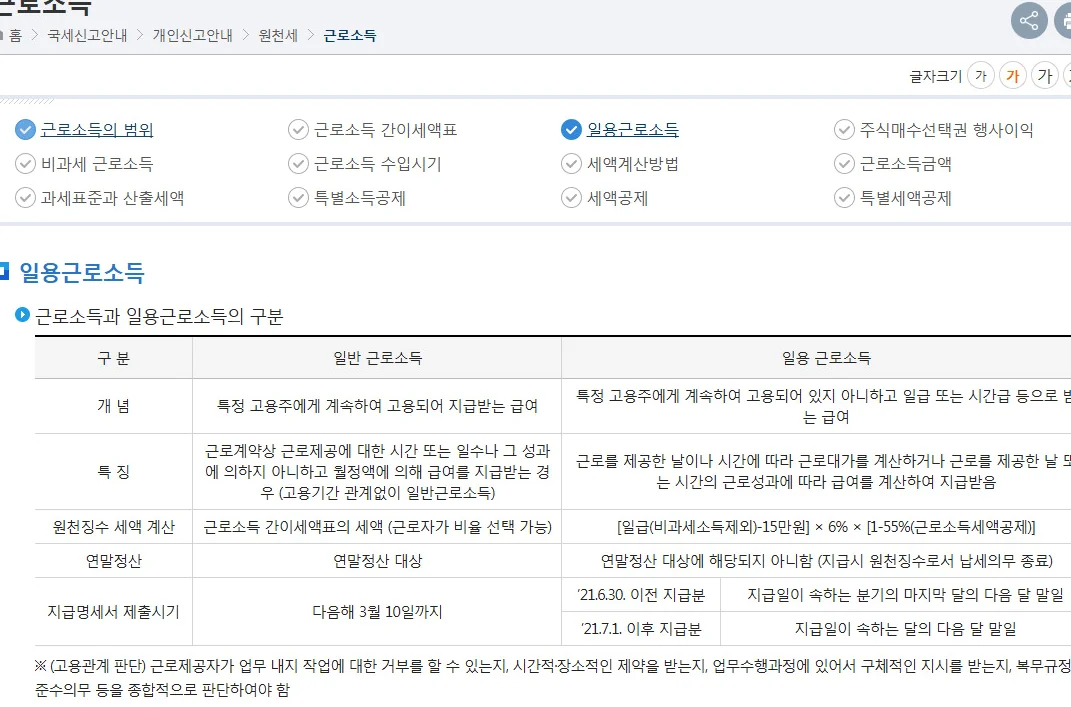
"The daily worker income tax rate is 2.97%." [1] While the 3.3% rate is standard for most creative and professional services, it is important to distinguish your status from daily workers. If you are hired for short-term manual labor or specific daily tasks, your tax rate might differ, and your employer handles the withholding differently. Always verify your status through HomeTax or by requesting a Certificate of Income to see how the government classifies your earnings.
Freelance Tax Frequently Asked Questions
Do I need to file income tax for daily labor manually?
Generally, no. For daily workers, the employer withholds and pays the tax at the source. However, you may still choose to include this in your May Global Income Tax filing if you believe you are eligible for a refund based on your total annual income.
Does working for a full month change my tax status?
If you work continuously at one workplace for more than three months, you may be reclassified from a daily worker to a regular employee. This shift means standard earned income tax rates and different social insurance requirements will apply to your paychecks.
Is social insurance mandatory for short-term freelance work?
Typically, independent contractors are responsible for their own insurance. However, if you work more than 20 days in a single month for one client, you might become eligible for mandatory National Pension and Health Insurance coverage through that employer. Managing taxes is a billable skill in itself. When I first started, I ignored the nuances of simple vs. standard expense rates and ended up paying nearly 2,000,000 KRW more than I should have. Now, I suggest every freelancer treats their tax accounting as a monthly recurring task. Whether you use tax accounting services or handle it yourself on HomeTax, staying organized is the only way to ensure your hard-earned money stays in your pocket.